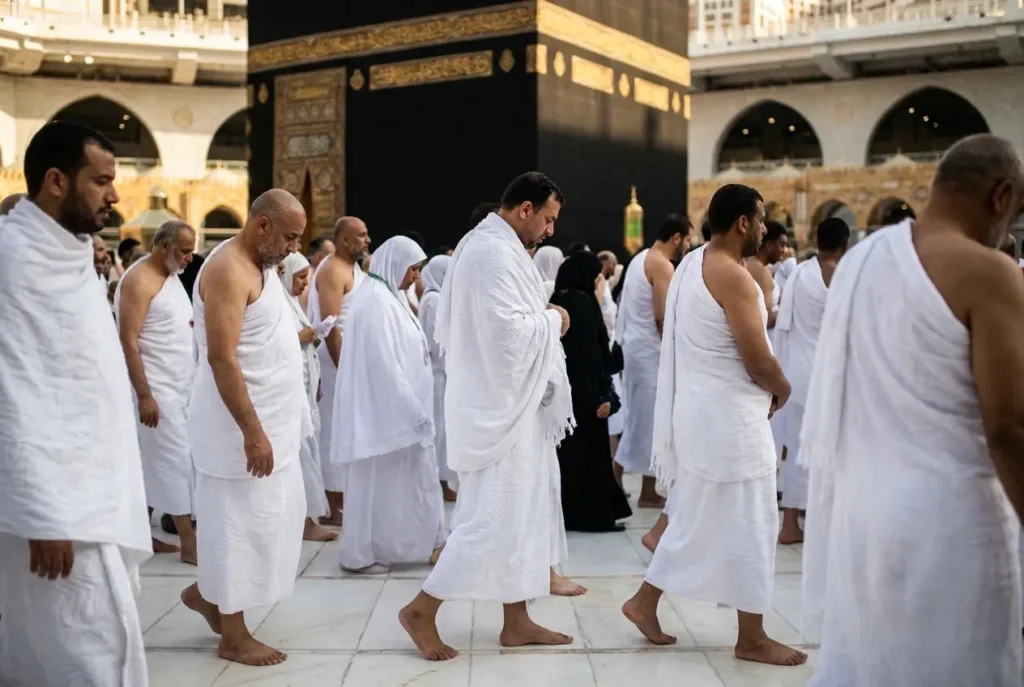
Hajj and Umrah are often mentioned together, but they are not the same. Understanding the difference helps you plan the right journey at the right time of year.
Obligation
Hajj is one of the five pillars of Islam and is obligatory once in a lifetime for every Muslim who is physically and financially able. Umrah is highly recommended but not obligatory, and can be performed as often as you wish.
Timing
Hajj can only be performed on specific days in the Islamic month of Dhul Hijjah. Umrah can be performed at any time of the year, which is why UK pilgrims often travel in school holidays, Ramadan or the cooler winter months.
Rituals
Umrah consists of Ihram, Tawaf, Sa’i and cutting the hair. Hajj includes all of these plus additional rites such as standing at Arafah, staying in Mina and Muzdalifah, and the stoning of the Jamarat. Hajj takes several days; Umrah can be completed in hours.
Cost and demand
Because Hajj is time-limited and places are capped, it is more expensive and must be booked well in advance. Umrah is more flexible and generally more affordable.
Which should you plan first?
Many people perform Umrah before they are ready for Hajj. If you are considering Hajj, start planning early — see our Hajj 2027 page. For a shorter, flexible trip, our Umrah packages are a good starting point.